

Industrial facilities across the Middle East and Africa could gain new capabilities to turn operational data into intelligent decisions as Cumulocity and Siemens Energy establish a strategic collaboration focused on Industrial AIoT, connected assets and increasingly autonomous operations.
Cumulocity, a leading industrial Artificial Intelligence of Things (AIoT) platform, has signed a memorandum of understanding (MoU) with Siemens Energy to explore the development of integrated digital solutions for industrial customers throughout the Middle East and Africa (MEA).
The agreement brings together Cumulocity’s scalable, enterprise-grade Industrial AIoT platform and Siemens Energy’s engineering expertise, operational technology (OT) integration capabilities and industrial digital applications.
The companies aim to help industrial organizations progress beyond basic equipment connectivity and monitoring toward more intelligent operations supported by contextualized data, advanced analytics and reliable decision-making.
The collaboration also seeks to establish the technological foundations needed for greater industrial autonomy, while creating opportunities to improve operational efficiency, asset reliability and the utilization of industrial resources.
Combining Industrial AIoT with Engineering and Operational Expertise
At the center of the agreement is the integration of Cumulocity’s Industrial AIoT capabilities with Siemens Energy’s extensive experience in engineering, energy systems and operational technology.
Cumulocity provides a scalable platform designed to connect industrial assets and support the management and use of operational data across complex industrial environments.
Siemens Energy contributes its knowledge of industrial processes, engineering requirements, operational systems and digital technologies.
By bringing these capabilities together, the companies intend to help customers connect information generated by industrial equipment with the operational context needed to interpret that information effectively.
This approach is designed to ensure that data collected from machinery, sensors and industrial systems can contribute to meaningful operational insights rather than remaining isolated within individual applications.
For industrial organizations, the potential benefits include a clearer understanding of equipment performance, improved visibility into operational conditions and stronger support for decisions affecting production, maintenance and infrastructure management.
Turning Operational Data into Actionable Industrial Intelligence
One of the collaboration’s main objectives is to help organizations move from collecting industrial data to using it more effectively in operational decision-making.
Industrial facilities generate significant volumes of information through machinery, control systems, connected sensors and digital applications.
However, transforming this information into useful intelligence requires more than simply connecting equipment or displaying performance indicators.
Operational data must be interpreted within the context of the processes, assets and conditions that generated it.
Through the proposed collaboration, Cumulocity and Siemens Energy aim to support the development of secure, contextualized data foundations that allow industrial organizations to better understand and use operational information.
These foundations are intended to help customers identify relevant patterns, evaluate performance and translate analytical findings into actions that can improve operational results.
The companies also plan to explore opportunities to strengthen connectivity across industrial environments, helping businesses establish more consistent access to information from distributed assets and systems.
Advancing Industrial Operations Beyond Connected Dashboards
The collaboration reflects a broader ambition to extend the value of Industrial AIoT beyond conventional monitoring and dashboard-based analysis.
Connected equipment provides essential information about operational conditions, but the next stage of industrial digitalization involves turning that information into intelligence capable of supporting increasingly sophisticated decisions.
Cumulocity and Siemens Energy aim to explore how industrial AI can help organizations progress toward operational models that are more automated, adaptive and capable of functioning with greater autonomy.
Such developments could enable industrial organizations to make better use of the information generated by their existing assets while establishing a foundation for more advanced digital capabilities.
The immediate objective is to create measurable operational value through improved data utilization and decision support.
Over the longer term, the companies envision industrial environments in which connected systems, contextualized data and intelligent technologies work together to support increasingly autonomous operations.
Connecting Industrial Equipment, Sensors and Digital Applications
Interoperability represents another major area of focus under the memorandum of understanding.
The companies will explore how Cumulocity’s Industrial AIoT platform can interact with Siemens Energy’s industrial systems, equipment, sensors and digital applications.
This includes investigating opportunities to enable the exchange of information across different industrial technologies and operational environments.
Importantly, the scope of the collaboration also extends to relevant third-party systems.
Industrial facilities frequently operate equipment and software from multiple technology providers, creating challenges when information must be shared across different platforms.
By exploring interoperability across these environments, Cumulocity and Siemens Energy aim to support more integrated industrial architectures that can make better use of existing infrastructure.
The proposed approach could help organizations reduce operational data fragmentation and establish a more coherent digital foundation for future industrial applications.
Asset Performance and Reliability Among Key Priorities
Improving asset performance and reliability will be one of the principal areas examined through the collaboration.
Industrial operators depend on the continuous availability and efficient performance of equipment that often operates under demanding conditions.
Access to reliable operational information can play an important role in understanding asset behavior, monitoring performance and identifying areas requiring attention.
By combining connected asset data with industrial expertise, the companies intend to explore solutions that support more informed asset management decisions.
The collaboration will also examine distributed asset monitoring.
This capability is particularly relevant to organizations managing equipment and infrastructure across multiple facilities or geographically dispersed locations.
Integrated monitoring solutions can help provide a more consistent view of operating conditions across distributed assets and support the effective coordination of industrial activities.
Digital Twins to Support Smarter Industrial Management
Digital twins are another key area identified in the agreement.
A digital twin uses a digital representation of a physical asset, process or system to support monitoring, analysis and operational understanding.
Within industrial environments, these technologies can provide additional ways to examine asset behavior and explore different operational scenarios.
The companies plan to investigate opportunities involving digital twins as part of their broader Industrial AIoT collaboration.
Combining digital representations with contextualized operational information could support more detailed analysis of industrial systems and help organizations evaluate potential operational improvements.
These capabilities are particularly relevant to complex industrial environments, where decisions may involve interconnected equipment, multiple operational variables and demanding reliability requirements.
The inclusion of digital twins also highlights the companies’ ambition to move beyond isolated monitoring solutions toward more comprehensive digital industrial environments.
Energy and Emissions Management Support Operational Efficiency
Energy and emissions management will form another important part of the proposed collaboration.
Industrial operators are increasingly focused on understanding how energy resources are used across their operations and how associated emissions can be monitored and managed.
The ability to connect operational information with energy-related data can provide a more comprehensive understanding of resource utilization.
Through the Industrial AIoT initiative, Cumulocity and Siemens Energy will explore digital solutions that support energy and emissions management.
These capabilities could help organizations examine relevant operational indicators and identify potential opportunities to improve resource efficiency.
The companies have not announced specific emissions reduction targets or guaranteed efficiency improvements under the agreement.
Instead, energy and emissions management have been identified as focus areas for developing integrated industrial digital solutions tailored to customer requirements.
Industrial Cybersecurity Remains a Core Focus
As industrial environments become more connected, cybersecurity plays an increasingly important role in protecting operational systems and critical infrastructure.
The integration of connected equipment, sensors, digital applications and data platforms introduces additional requirements for managing secure information exchange.
Cumulocity and Siemens Energy have therefore identified industrial cybersecurity as one of the principal areas of focus for their collaboration.
The companies intend to explore solutions that support secure industrial connectivity and the development of trusted operational data environments.
This is especially relevant to organizations operating energy facilities, industrial plants and distributed infrastructure, where system reliability and secure operations are essential.
By including cybersecurity alongside connectivity, analytics and digital twins, the agreement reflects the importance of considering security as part of the broader industrial digitalization process.
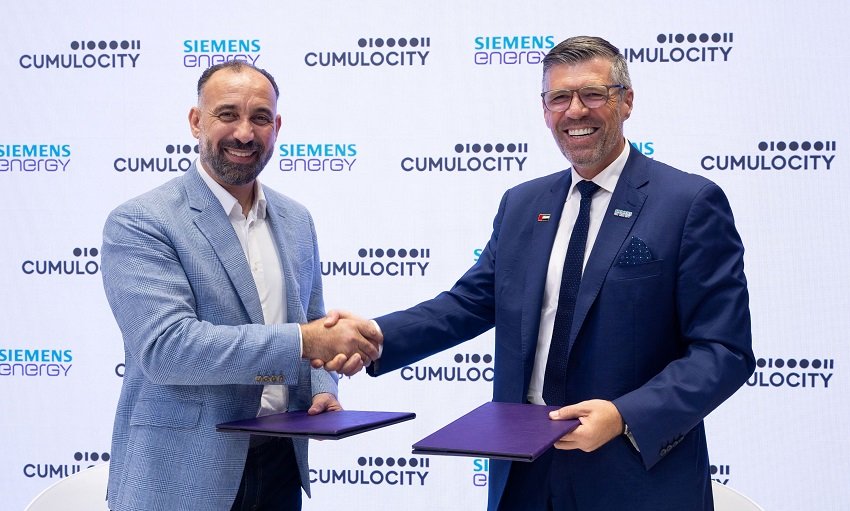
Cumulocity: Industrial AI Is Moving Toward Autonomous Operations
Nasri Nassereddine, General Manager for the Middle East, Turkey and Africa at Cumulocity, emphasized that industrial artificial intelligence is changing how organizations use connected assets and operational information.
He explained that the development of industrial AI is moving beyond basic asset connectivity and visualization dashboards toward systems capable of supporting greater operational autonomy.
According to Nassereddine, combining Cumulocity’s scalable Industrial AIoT platform and AI-ready operational data foundation with Siemens Energy’s industrial, engineering and operational technology expertise creates an opportunity to help customers transform data into intelligence.
The next stage, he indicated, involves using that intelligence to support reliable operational action.
Nassereddine also highlighted the importance of delivering practical and measurable value to industrial customers today while establishing the technological foundations for more autonomous industrial operations in the future.
His remarks underline the collaboration’s two central objectives: improving current operational performance and preparing industrial businesses for the next generation of intelligent systems.
Siemens Energy Targets Measurable Value from Industrial Data
Dr Zied Ouertani, Vice President – Digital Transformation at Siemens Energy, highlighted the potential value of bringing together Cumulocity’s IoT capabilities and Siemens Energy’s extensive expertise in the energy sector.
He noted that Siemens Energy’s global installed base, combined with its industry knowledge, provides a foundation for exploring ways to turn industrial data into measurable benefits for customers.
Ouertani explained that the collaboration aims to accelerate industrial digitalization at scale.
The objective is to help customers operate their assets with greater intelligence, reliability and efficiency by making more effective use of connected information and digital technologies.
His comments emphasize the importance of ensuring that digital transformation efforts deliver operational outcomes rather than simply introducing new technologies.
The agreement is intended to combine complementary capabilities that can support industrial customers as they modernize their systems and seek to improve operational performance.
Oil and Gas Companies Among Initial Target Customers
The initial phase of the collaboration will focus on identifying customer opportunities across several industrial sectors in the Middle East and Africa.
National oil companies will be among the principal organizations targeted, reflecting the importance of large-scale energy operations within the region.
The companies will also explore opportunities involving oil and gas operators, whose facilities often include extensive networks of industrial equipment, monitoring systems and operational assets.
Petrochemical and process industries represent another important area of focus.
These sectors depend on complex industrial processes and require reliable access to operational information to support production, asset management and efficiency.
The scope also includes utilities serving industrial sites, as well as facilities associated with terminals and distributed industrial assets.
These environments present potential opportunities for integrated connectivity, contextualized data management and advanced digital applications.
By initially concentrating on these industries, Cumulocity and Siemens Energy intend to explore practical applications of their combined expertise in sectors where operational technology plays a central role.
Middle East and Africa Offer Opportunities for Industrial Digitalization
The Middle East and Africa provide a strategic geographic focus for the agreement, particularly given the presence of major energy producers, industrial operators and infrastructure-intensive businesses across the region.
Many of these organizations manage complex assets across multiple locations, creating demand for reliable connectivity and effective operational data management.
Industrial AIoT technologies can help address these requirements by enabling organizations to connect equipment and use the resulting information more effectively.
The combination of industrial expertise and digital platforms may also support broader efforts to modernize industrial operations and strengthen infrastructure performance.
For businesses operating in energy, petrochemicals and process industries, the ability to connect operational information with business and engineering context could provide additional opportunities to improve decision-making.
The proposed collaboration seeks to address these challenges through solutions that integrate technical capabilities with the operational requirements of industrial customers.
Building the Foundation for Autonomous Industrial Operations
The memorandum of understanding between Cumulocity and Siemens Energy establishes a framework for exploring integrated Industrial AIoT solutions across the Middle East and Africa.
Its focus extends from asset connectivity and secure operational data foundations to advanced digital capabilities involving reliability, distributed monitoring, energy management, digital twins and cybersecurity.
By combining Cumulocity’s scalable platform with Siemens Energy’s engineering and operational technology expertise, the companies aim to help industrial organizations extract greater value from their existing systems and data.
The agreement also reflects a long-term vision in which industrial operations become increasingly intelligent, connected and capable of supporting more autonomous decision-making.
While the memorandum establishes the intended direction of cooperation rather than confirming the deployment of specific customer solutions, it creates opportunities for both companies to investigate technologies that can deliver measurable operational benefits.
Ultimately, the collaboration highlights the evolving role of Industrial AIoT in connecting physical industrial infrastructure with digital intelligence, helping organizations prepare for a future in which data-driven decisions and increasingly autonomous operations become central to industrial performance.
Register to our mailing list to receive the latest news
Also follow us on the technology portal and its news in Egypt