

With 7,600 exhibitors and a 20% expansion of its New Energy and Connectivity area, the international automotive exhibition will spotlight electric commercial fleets, artificial intelligence, autonomous transport and the technologies transforming global mobility.
The transformation of global transportation is gathering momentum as artificial intelligence, vehicle electrification, autonomous driving and advanced connectivity reshape the future of passenger and commercial mobility. At the centre of this evolution, Automechanika Shanghai 2026 is preparing to showcase a new generation of automotive technologies, bringing together international manufacturers, technology developers, component suppliers and mobility specialists.
Scheduled to take place from December 2 to 5, 2026, at the National Exhibition and Convention Center in Shanghai, the exhibition will welcome approximately 7,600 exhibitors, highlighting China’s expanding influence across the global automotive technology ecosystem.
The event comes as Chinese automotive innovation moves beyond passenger electric vehicles to encompass intelligent commercial transport, battery technologies, charging infrastructure, integrated logistics solutions and digitally connected fleets.
These developments are particularly relevant to the United Arab Emirates, Saudi Arabia and Egypt, where governments and businesses are pursuing greater transport efficiency, reliable fleet operations, industrial development and improved charging and maintenance capabilities.
New Energy and Connectivity Area Expands by 20%
One of the main attractions at Automechanika Shanghai 2026 will be the expansion of its dedicated New Energy and Connectivity area by 20%, reflecting rising international demand for electric mobility and intelligent automotive solutions.
Nearly half of the exhibition’s participating companies are expected to present products or services connected to new energy technologies, demonstrating how electrification is becoming an increasingly important component of automotive manufacturing and the aftermarket.
The expanded exhibition area will introduce innovations covering intelligent automotive components, embedded artificial intelligence, advanced batteries, charging and battery-swapping infrastructure, next-generation smart cockpits and autonomous driving technologies.
By bringing these solutions together, the event will illustrate how the industry is moving beyond individual vehicle technologies towards interconnected mobility ecosystems capable of supporting manufacturers, service providers and fleet operators.
Chinese Automotive Manufacturers Strengthen Global Supply Chains
The international expansion of Chinese automotive companies is reshaping manufacturing partnerships, regional distribution networks and automotive supply chains.
Leading manufacturers are increasingly developing local production capabilities and collaborating with international partners to establish stronger positions across emerging and established markets.
Aion, for example, is establishing localized manufacturing bases and battery-charging infrastructure across Southeast Asia, while Li Auto is developing vehicle assembly operations outside China.
Meanwhile, Marelli is using strategic partnerships to strengthen and integrate regional distribution networks.
Manufacturing collaborations are also creating new opportunities for component development and international market access.
The DDAC-DONGFENG DANA AXLE joint venture demonstrates this approach by pooling manufacturing resources to supply drivetrain systems to markets across South America, Europe and the Middle East.
Such collaborations reflect a broader shift towards integrated international automotive value chains, where manufacturing expertise, technology development and regional market requirements increasingly influence investment decisions.
International Standards Become Essential to Automotive Innovation
As electric and intelligent automotive technologies enter new markets, compliance with international technical standards is becoming an increasingly important factor in commercial deployment.
Safety certification, testing procedures, quality assurance and environmental requirements all play a central role in ensuring that emerging technologies can operate reliably under different regulatory and technical conditions.
At Automechanika Shanghai 2026, the Automotive Industry Action Group (AIAG) will provide specialized insights into international quality management and carbon management standards.
These discussions will be supported through dedicated exhibition zones, industry summits and business matchmaking activities designed to help manufacturers and suppliers understand local compliance expectations.
The exhibition’s broader conference program will also address the relationship between technological innovation, product reliability, quality assurance and international standardization.
For automotive businesses seeking to expand across borders, these subjects are increasingly important to reducing market-entry barriers and strengthening long-term competitiveness.
AI and Autonomous Driving Take Centre Stage
The Intelligent Connected Vehicle Innovation and Development Conference 2026 will be among the major events accompanying the exhibition.
The conference will examine intelligent connected vehicle product type approval, emerging autonomous driving technologies and the integration of large-scale artificial intelligence foundation models into automotive systems.
These subjects highlight how artificial intelligence is progressing from individual vehicle functions towards wider applications involving vehicle intelligence, autonomous navigation and connected transport infrastructure.
The discussions are especially relevant to the UAE, Saudi Arabia and Egypt, where the successful adoption of intelligent mobility technologies requires compatibility with domestic regulations, infrastructure and operating environments.
For Egypt, the event also corresponds with ongoing efforts to expand local automotive manufacturing and develop the technical expertise necessary to support electric and connected vehicles.
By connecting international technology developers with regional manufacturers, suppliers and fleet operators, the exhibition could facilitate access to advanced solutions while supporting integration into global automotive supply chains.
Electric Commercial Vehicles Transform Fleet Operations
Beyond passenger transportation, the development of electric powertrains and intelligent automotive systems is creating opportunities to modernize commercial fleets and logistics networks.
Electrification is no longer limited to replacing conventional engines with electric alternatives. It increasingly involves a wider transformation of the logistics value chain, including battery management, charging networks, maintenance systems and automated operations.
The competitive focus is consequently shifting towards integrated solutions that combine vehicle performance with operational efficiency and infrastructure readiness.
Several leading exhibitors will demonstrate technologies designed specifically for commercial transport.
Henglong Group is expanding its product portfolio with advanced steering systems developed for Level 2 and higher autonomous trucks.
WLY is producing durable transmission systems and gear shafts designed for hybrid and electric commercial fleets.
At the same time, Dongfeng Wheel is advancing lightweight technologies intended to maintain commercial vehicle strength while reducing weight.
Doublestar will introduce advanced tyre carcass structures, while workshop technology suppliers FCAR and MAXIMA will showcase high-voltage auxiliary power solutions and heavy-duty mobile column lifts certified to international safety standards.
These technologies underline the growing importance of specialized components and maintenance equipment in supporting commercial vehicle electrification.
Electric Logistics Forum Explores Zero-Carbon Transport
The Electric Logistics & Commercial Vehicles International Forum 2026 will examine the operational challenges and opportunities associated with the next generation of commercial transportation.
Among its principal discussion topics will be ultra-fast charging systems, integrated solar-storage-charging infrastructure and zero-carbon logistics parks.
The forum will also explore battery operation solutions designed for commercial fleets facing intensive daily usage requirements.
Emerging technological developments aim to improve vehicle driving range, enhance energy efficiency and integrate intelligent operating systems into logistics activities.
Meanwhile, autonomous driving applications in highway transportation, ports and mining environments are opening new possibilities for automation in industrial and freight operations.
Electric buses are also expected to remain an important component of China’s international commercial vehicle offering, reflecting growing interest in cleaner public transportation systems.
UAE Accelerates Electric Bus and Autonomous Truck Deployment
The UAE is among the regional markets pursuing the modernization of transportation through electric propulsion and intelligent mobility solutions.
In January 2026, Dubai’s Roads and Transport Authority (RTA) announced the receipt of 250 buses as part of a wider procurement contract covering 735 vehicles.
The delivery included 40 electric buses, demonstrating how the emirate is combining public transport fleet expansion with the introduction of alternative propulsion technologies.
Designed to meet Gulf specifications, the electric buses underwent regional testing and were adapted to Dubai’s operating conditions.
According to the RTA, the vehicles can travel up to 280 kilometres on a single charge.
These technical requirements illustrate the importance of aligning electric vehicle capabilities with local climate conditions, charging infrastructure and maintenance resources.
In Abu Dhabi, autonomous freight technology is also progressing through controlled industrial testing.
In February 2026, the Integrated Transport Centre reported that it had overseen pilot operations of autonomous logistics trucks in collaboration with Autotech and AD Ports Group.
The trial journeys were conducted along designated routes within Khalifa Economic Zones Abu Dhabi (KEZAD), operating under approved regulatory frameworks and technical standards.
The initiative is designed to evaluate the performance of autonomous freight systems within a defined industrial and logistics environment before broader commercial deployment.
Saudi Arabia Develops Electric Truck Infrastructure
Saudi Arabia is also advancing commercial fleet electrification through partnerships linking vehicle suppliers, logistics operators and charging infrastructure providers.
In October 2026, global logistics company DSV announced plans to introduce 10 electric trucks into its Riyadh operations by mid-November.
The initiative involves collaboration with EVIQ and Hala Auto, combining commercial electric vehicles with the charging infrastructure required to support their operations.
Under the arrangement, Hala Auto will supply the electric trucks, while EVIQ is developing dedicated depot-charging facilities and providing access to its wider charging network.
The project demonstrates the importance of coordinating vehicle procurement, energy infrastructure and logistics expertise when transitioning commercial fleets towards electric mobility.
For the Saudi market, such partnerships can help establish the practical operating models required to support wider commercial transport electrification.
Egypt’s Commercial Vehicle Market Records Strong Growth
Egypt’s automotive market is experiencing notable growth in commercial vehicle demand, alongside ambitions to strengthen domestic electric vehicle manufacturing.
According to figures from the Automotive Market Information Council, as reported by Arab Finance, bus sales increased by 78.5% year on year during the first eight months of 2026.
Over the same period, truck sales recorded an increase of 22.7%.
These growth figures cover vehicles using all types of powertrains and should not be interpreted as sales figures exclusively for electric vehicles.
Separately, Egypt is targeting annual production capacity of up to 100,000 electric vehicles by 2032, reflecting its broader ambition to develop a competitive domestic automotive manufacturing industry.
The reported start of local production of the Dongfeng Mage EV further illustrates the growing cooperation between Egyptian industrial stakeholders and Chinese automotive manufacturers.
Together, these developments could create additional opportunities for component suppliers, vehicle maintenance providers, technical training organizations and specialist aftermarket businesses.
They also highlight the importance of developing the industrial skills and supporting services required for emerging automotive technologies.
Green Repair Area Highlights New EV Maintenance Skills
As electric vehicle adoption expands, workshop capabilities and technical training are becoming critical elements of automotive market development.
At Automechanika Shanghai 2026, the Green Repair Area will address these requirements through demonstrations and specialist training focused on new energy vehicle maintenance.
Technical subjects will include battery systems, electric motors and electronic control technologies.
The program will also feature inspection and repair case studies involving wheel-end components and axles used in new energy heavy-duty trucks.
These activities are intended to help automotive service providers understand the technical requirements of increasingly sophisticated commercial electric vehicles.
The development of specialized maintenance expertise is particularly important for markets seeking to increase local service capacity while reducing operational downtime.
Fleet Electrification Requires More Than Vehicle Investment
Despite growing interest in electric and autonomous commercial vehicles, successful adoption continues to depend on several economic and operational considerations.
For fleet operators, the total cost of ownership remains a major factor influencing vehicle procurement decisions.
Financing conditions, vehicle availability, spare parts supply, charging accessibility and maintenance infrastructure can all affect the commercial viability of electrification projects.
Operators must also assess vehicle driving range, route characteristics, daily usage requirements and operating costs before committing to new technologies.
For businesses running intensive logistics operations, the suitability of a particular vehicle for local conditions can be as important as its technical specifications.
Consequently, successful fleet modernization requires a coordinated approach involving vehicle manufacturers, infrastructure developers, aftermarket specialists and logistics operators.
Bosch, ZF and Leading Suppliers Showcase Advanced Automotive Systems
The exhibition will bring together established international automotive suppliers and emerging technology innovators to demonstrate solutions for both passenger and commercial vehicles.
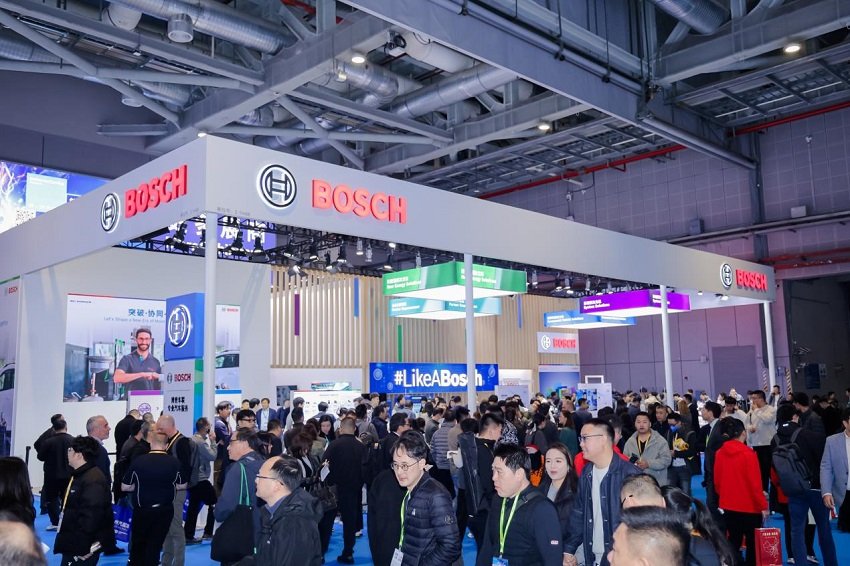
Among the participating technology leaders, Bosch will showcase next-generation chassis systems, while Feilong will present technologies focused on thermal management.
Knorr-Bremse will demonstrate intelligent electro-hydraulic steering systems.
ZF will highlight integrated electric axle technology alongside its digitalized aftermarket diagnostics platform.
Automotive diagnostic solutions will also occupy a prominent position across the exhibition.
Autel will showcase its six-in-one high-voltage diagnostic platform, designed to support increasingly complex electric vehicle maintenance requirements.
Meanwhile, Launch will introduce a new AI Agent supporting advanced workshop functions.
Hongxin Technology will also present lightweight sensors for commercial vehicle applications.
Together, these innovations demonstrate how electrification and artificial intelligence are reshaping not only vehicle manufacturing but also the tools, equipment and expertise required throughout a vehicle’s operational life.
Global Automotive Innovation Opens New Opportunities for the Middle East
As automotive technologies become increasingly interconnected, Automechanika Shanghai 2026 will provide a platform for international collaboration across manufacturing, transport operations, technology development and aftermarket services.
For companies operating in the UAE and Saudi Arabia, the exhibition offers opportunities to explore solutions supporting fleet renewal, operational efficiency and emerging maintenance requirements.
For Egypt, the event is particularly relevant to ambitions involving local vehicle production, industrial capacity building and the development of a more advanced automotive supply chain.
The exhibition’s combination of advanced vehicle technologies, international standards, commercial vehicle solutions and specialist training will provide industry professionals with opportunities to evaluate innovations and establish new business relationships.
Ultimately, Automechanika Shanghai 2026 is set to demonstrate how electric mobility, artificial intelligence, autonomous systems and international industrial collaboration are converging to shape the next phase of global transportation and logistics.
Sign up for our mailing list to receive the latest news.
Follow us also on the tech news portal in the UAE