

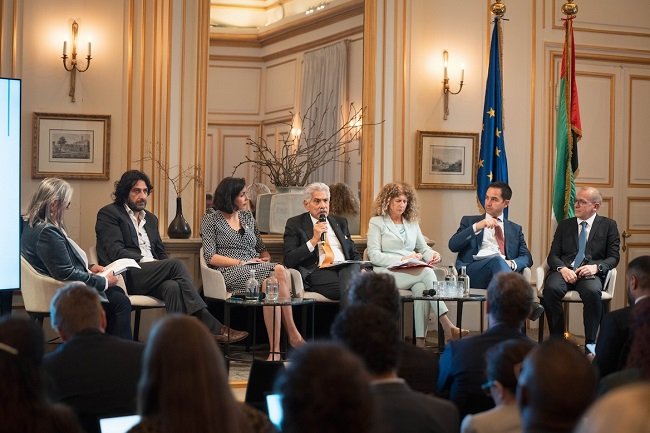
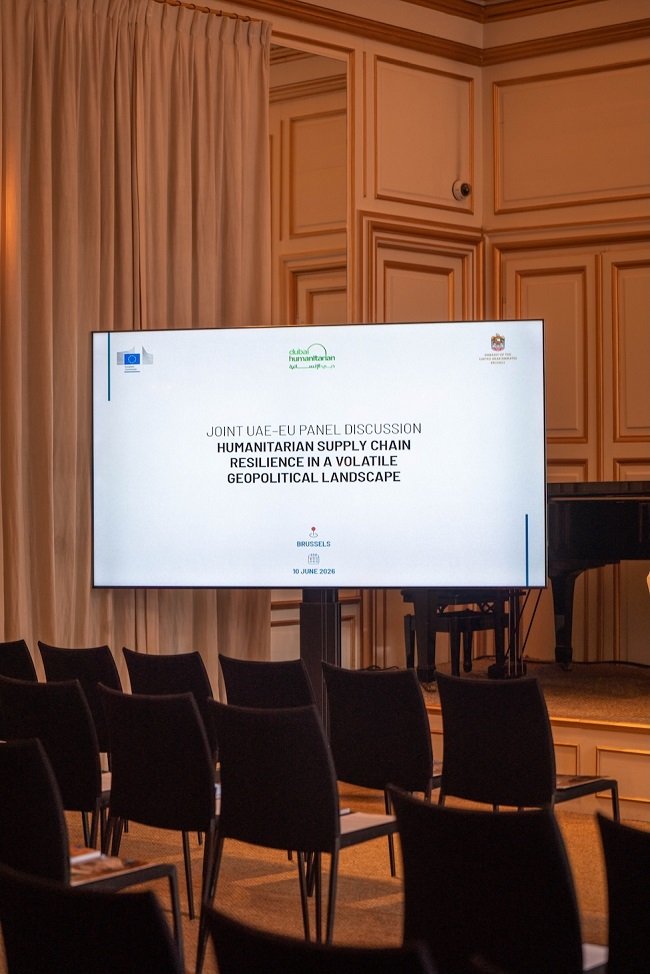
Brussels, in collaboration with Dubai Humanitarian and the European Commission’s Directorate-General for European Civil Protection and Humanitarian Aid Operations (DG ECHO), convened a high-level panel discussion focused on strengthening humanitarian supply chain resilience in an increasingly volatile geopolitical environment.
The event brought together more than 80 senior representatives from the European Union, the United Arab Emirates, UN agencies, non-governmental organizations, humanitarian logistics experts, and private sector stakeholders to address the growing strain on global supply networks and explore coordinated strategies to maintain uninterrupted aid delivery during crises.
Rising Challenges Impacting Global Supply Chains
Participants examined the escalating impact of geopolitical instability on humanitarian logistics, including armed conflicts, maritime security threats, airspace restrictions, and widespread disruptions to global supply chains.
These challenges are placing unprecedented pressure on humanitarian operations, making it more difficult to ensure timely and reliable delivery of essential supplies such as food, fuel, and medical aid to vulnerable populations worldwide.
UAE Emphasizes Preparedness and Strategic Partnerships
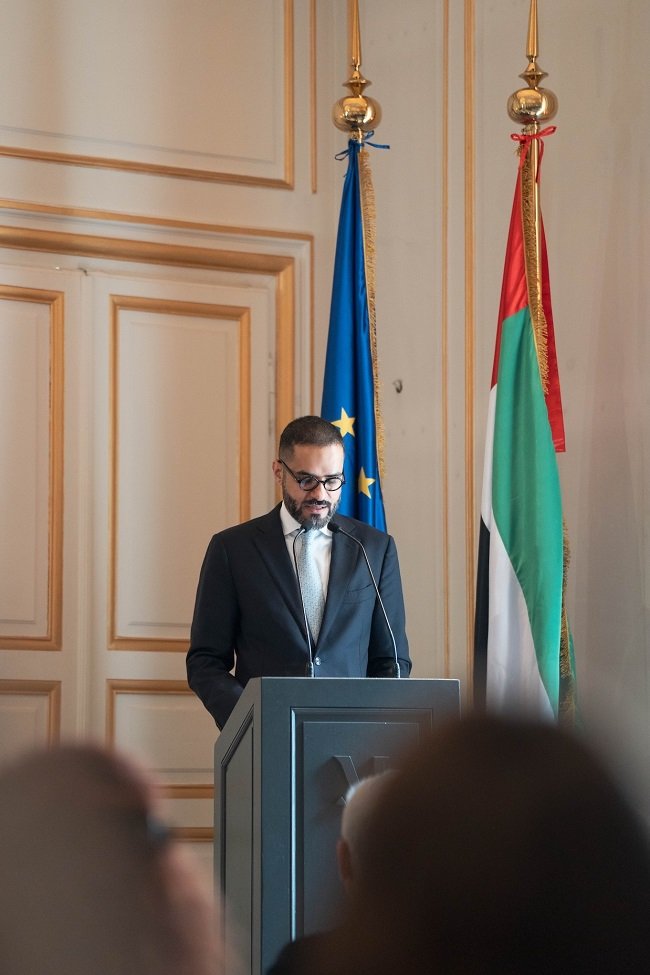
In his opening remarks, Ambassador Mohammed Ismail Al Sahlawi highlighted the critical importance of global supply routes, noting that millions depend on vital goods transported through strategic maritime corridors such as the Strait of Hormuz.
He stressed that recent disruptions are part of a broader pattern observed since the COVID-19 pandemic, adding that the UAE has been actively working with European partners to strengthen preparedness, enhance resilience, and future-proof humanitarian logistics systems through shared learning and collaboration.
European Union Calls for Integrated Systems
Maciej Popowski, Director-General of DG ECHO, underscored that resilience in humanitarian supply chains can only be achieved through strong international cooperation.
He emphasized the need to move away from fragmented and isolated supply chain models toward more integrated and coordinated systems that improve efficiency, adaptability, and preparedness. Such transformation, he noted, is essential to ensuring that life-saving assistance reaches those most in need, particularly in an unpredictable global landscape.
Dubai Humanitarian Highlights Role of Global Collaboration
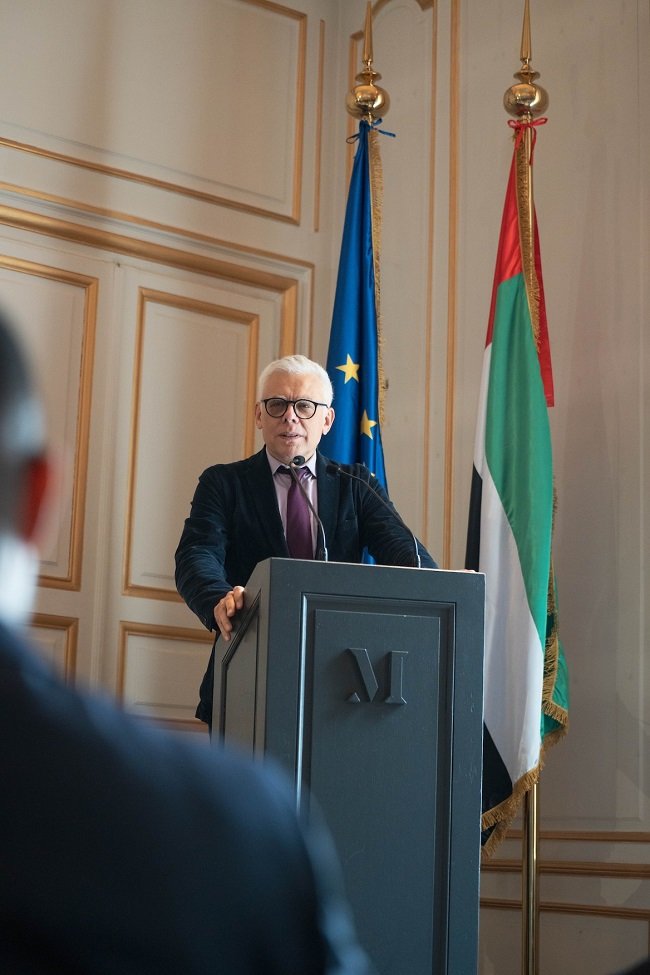
Giuseppe Saba, CEO of Dubai Humanitarian, pointed out that the effectiveness of humanitarian action today depends heavily on the ability to collaborate across borders and systems.
He explained that resilient partnerships, well-prepared humanitarian ecosystems, and efficient logistics networks are fundamental to sustaining aid delivery. He also reiterated Dubai Humanitarian’s mission to support global humanitarian efforts by maintaining a reliable and uninterrupted flow of assistance to affected communities.
Addressing Pressure on Humanitarian Operations
The discussion further explored how ongoing conflicts and security challenges are complicating humanitarian access and disrupting traditional supply routes.
Experts highlighted the importance of building more robust logistics infrastructure and implementing flexible mechanisms, such as adaptive humanitarian corridors, to ensure that aid can continue to reach those in need despite operational constraints.
Strengthening UAE–EU Humanitarian Cooperation
The event also reflected the deepening strategic partnership between the UAE and the European Union in the humanitarian sector, building on the administrative arrangement signed in 2025 between DG ECHO and Dubai Humanitarian.
Since then, both sides have enhanced coordination across humanitarian operations through shared logistics hubs, exchange of expertise and best practices, and joint efforts to strengthen community preparedness and global response capabilities.
Dubai Humanitarian’s Model for Operational Continuity
Insights from Dubai Humanitarian demonstrated how integrated logistics systems and pre-positioned stockpiles can sustain aid flows even during severe disruptions.
Its coordinated network of partners and global humanitarian hubs has played a vital role in delivering assistance to crisis-affected regions such as Gaza, Lebanon, and Afghanistan, showcasing a scalable model for maintaining operational continuity under challenging conditions.
Rethinking the Future of Humanitarian Response
The panel emphasized the urgent need to rethink traditional humanitarian response systems, as global needs continue to rise faster than existing capacities.
Speakers highlighted the growing importance of humanitarian diplomacy, proactive preparedness, and rapid response mechanisms in addressing increasingly complex emergencies.
Key Pillars for Future-Proofing Supply Chains
Discussions identified several core elements essential for strengthening humanitarian logistics systems, including resilience, preparedness, adaptability, digital transformation, localization, and multi-stakeholder coordination.
The session also provided a platform to identify operational gaps and explore new opportunities for deeper collaboration between European humanitarian actors and Dubai Humanitarian’s global network.
Conclusion: A Shared Commitment to Resilient Aid Delivery
The dialogue concluded with a strong consensus on the need to reinforce international cooperation frameworks to ensure that humanitarian assistance remains efficient, reliable, and uninterrupted.
Participants reaffirmed their commitment to building more resilient and responsive supply chains capable of meeting urgent global humanitarian needs in an increasingly complex world.
Sign up for our mailing list to receive the latest news.